Concrete Driveway Building
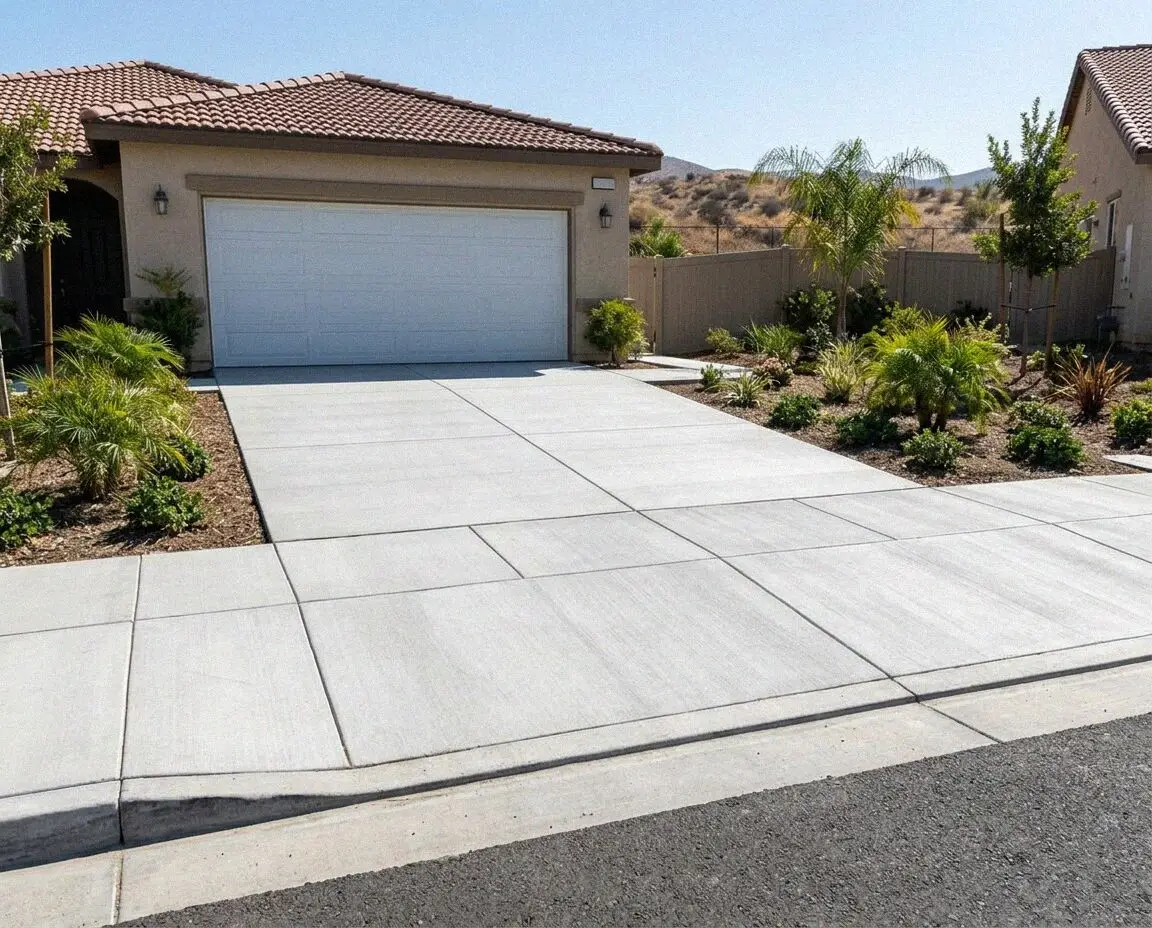
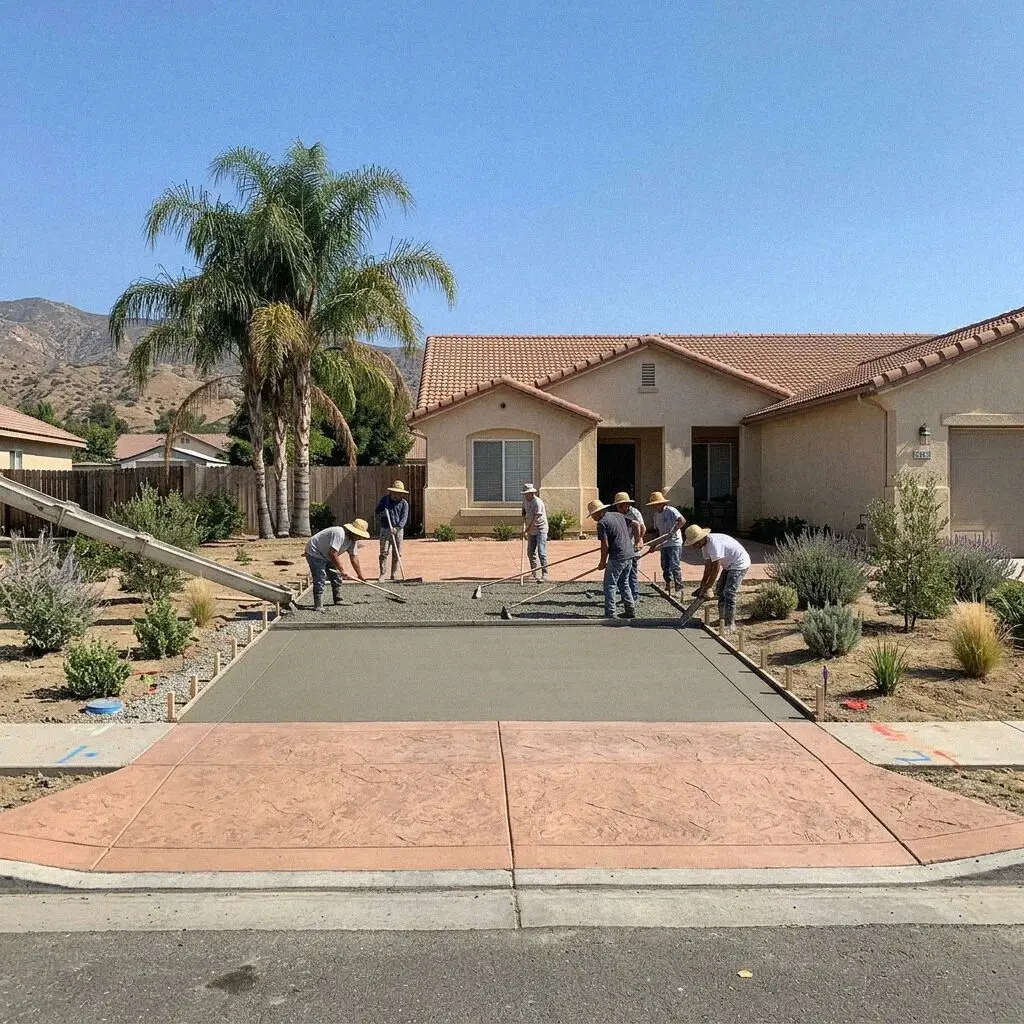
Ruts, broken edges or a slab that knocks? A new drive on screened and imported base, poured 4 to 6 inches for what you actually park.

Driveways, garage floors, parking lots and retaining walls, poured on Lytle Creek fan gravel that drains well and hides soft seams. The estimate is free, measured on your lot before any figure is given.


 5.0 Stars Rated by our customers · Google, Facebook and the BBB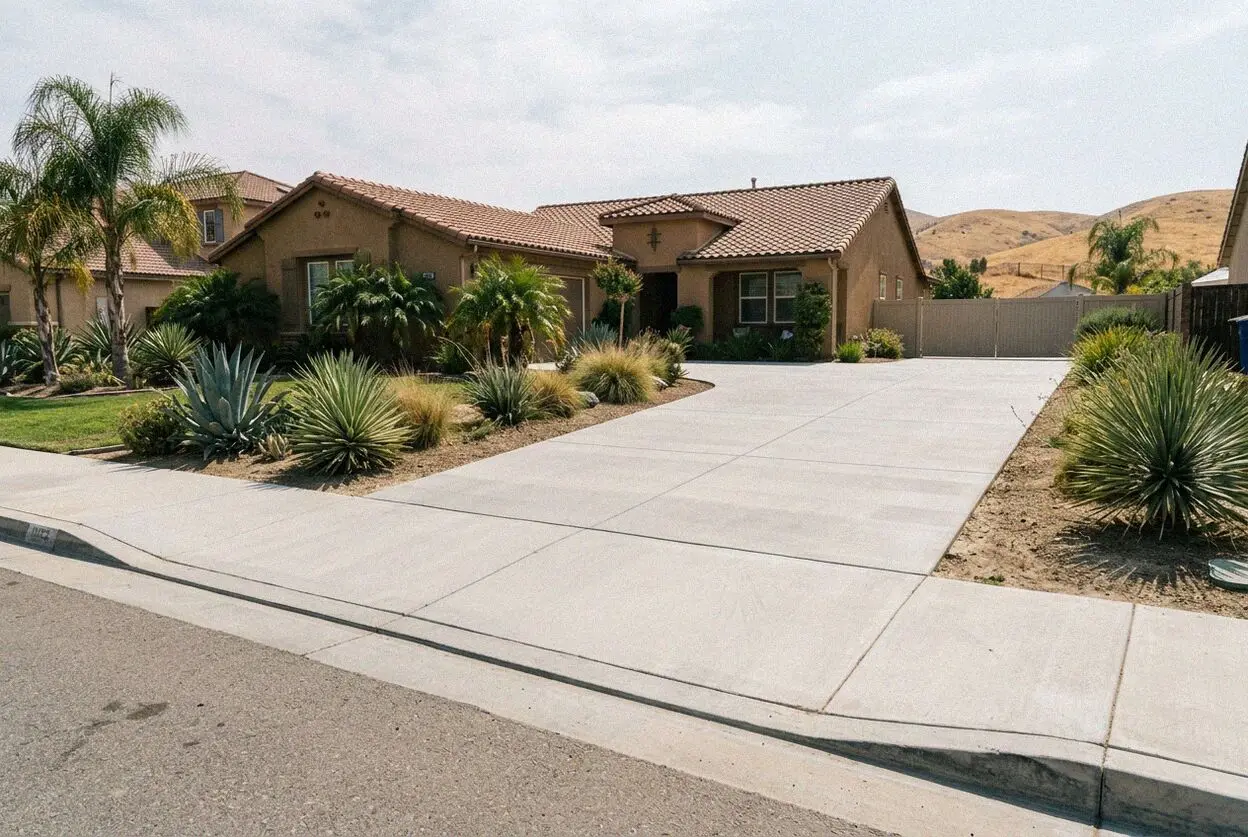
From a 1950s frontage south of Valley to a warehouse apron on Slover, one crew and one specification. New garage floors, failed flatwork lifted out and replaced, and decorative finishes, all built to California code.
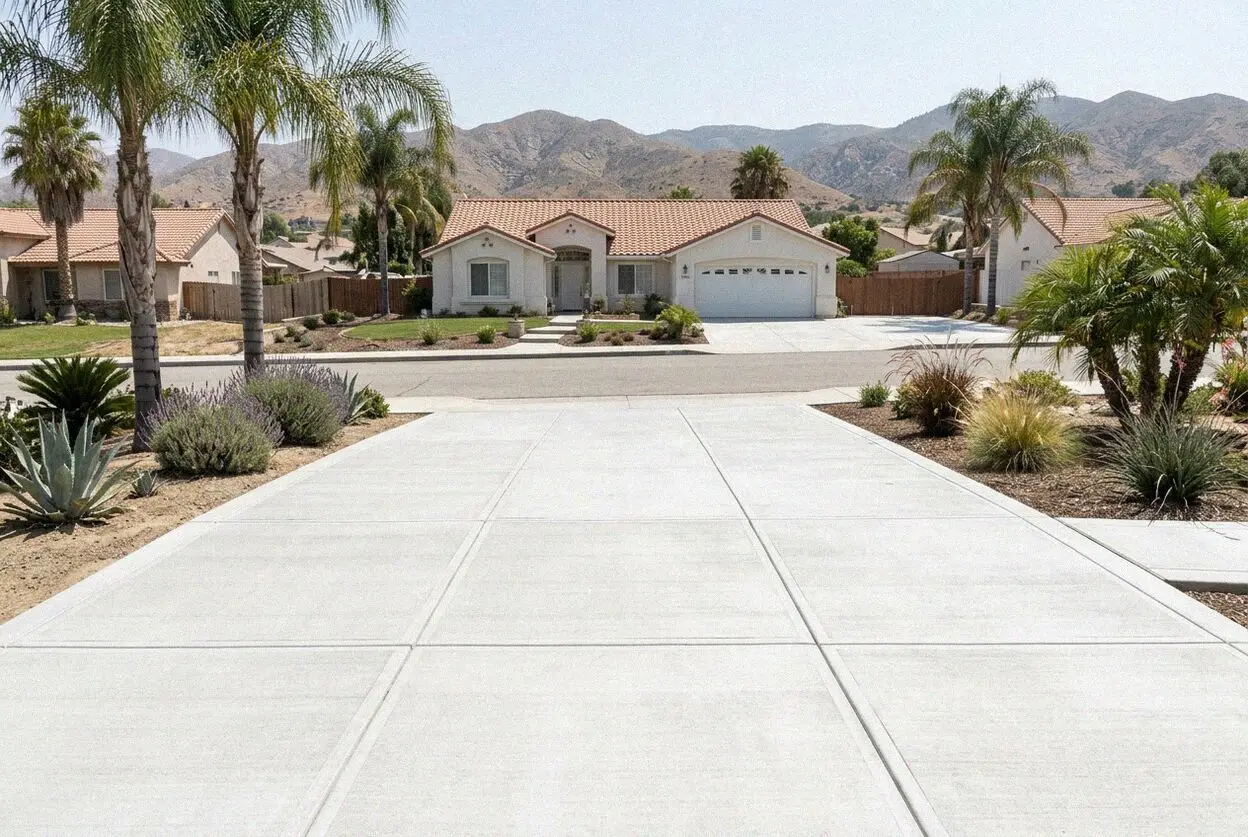
Ruts, broken edges or a slab that knocks? A new drive on screened and imported base, poured 4 to 6 inches for what you actually park.
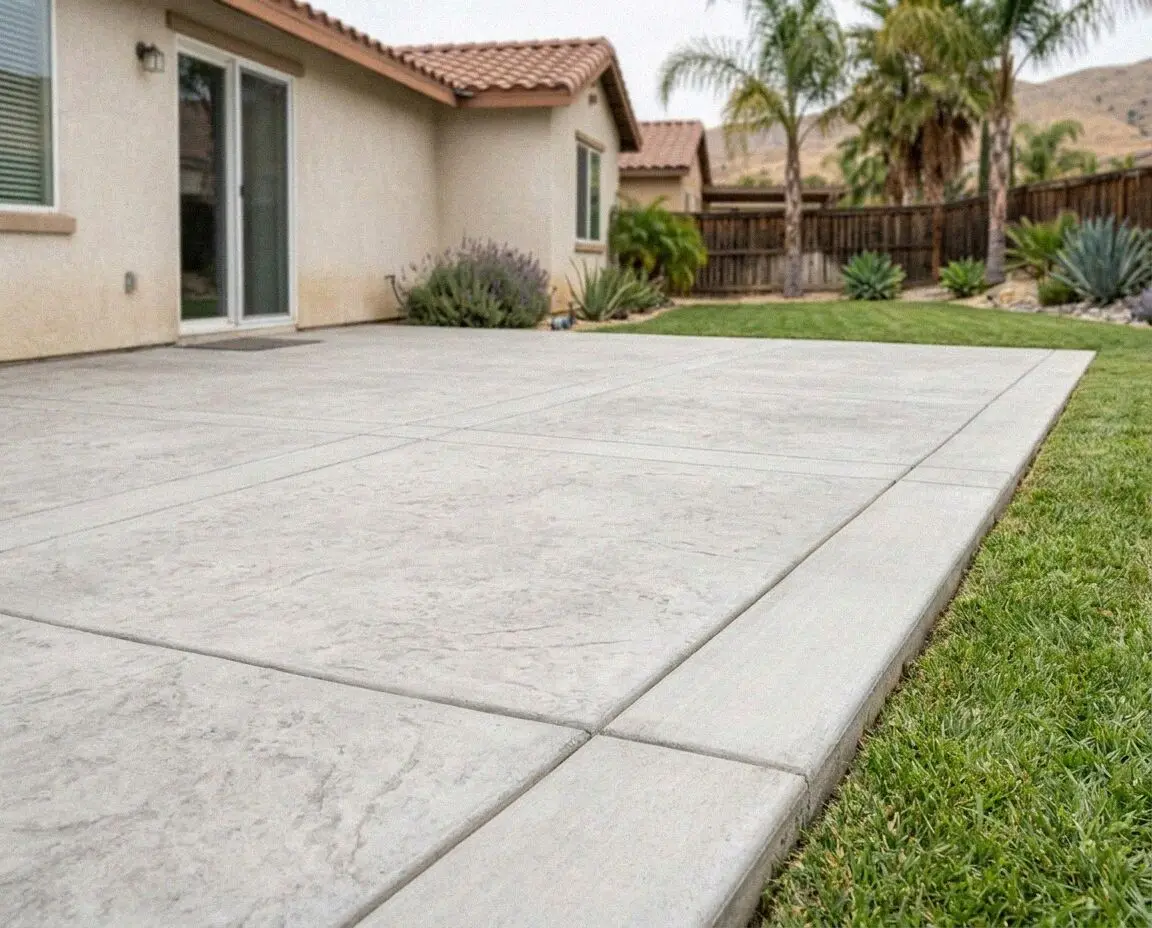
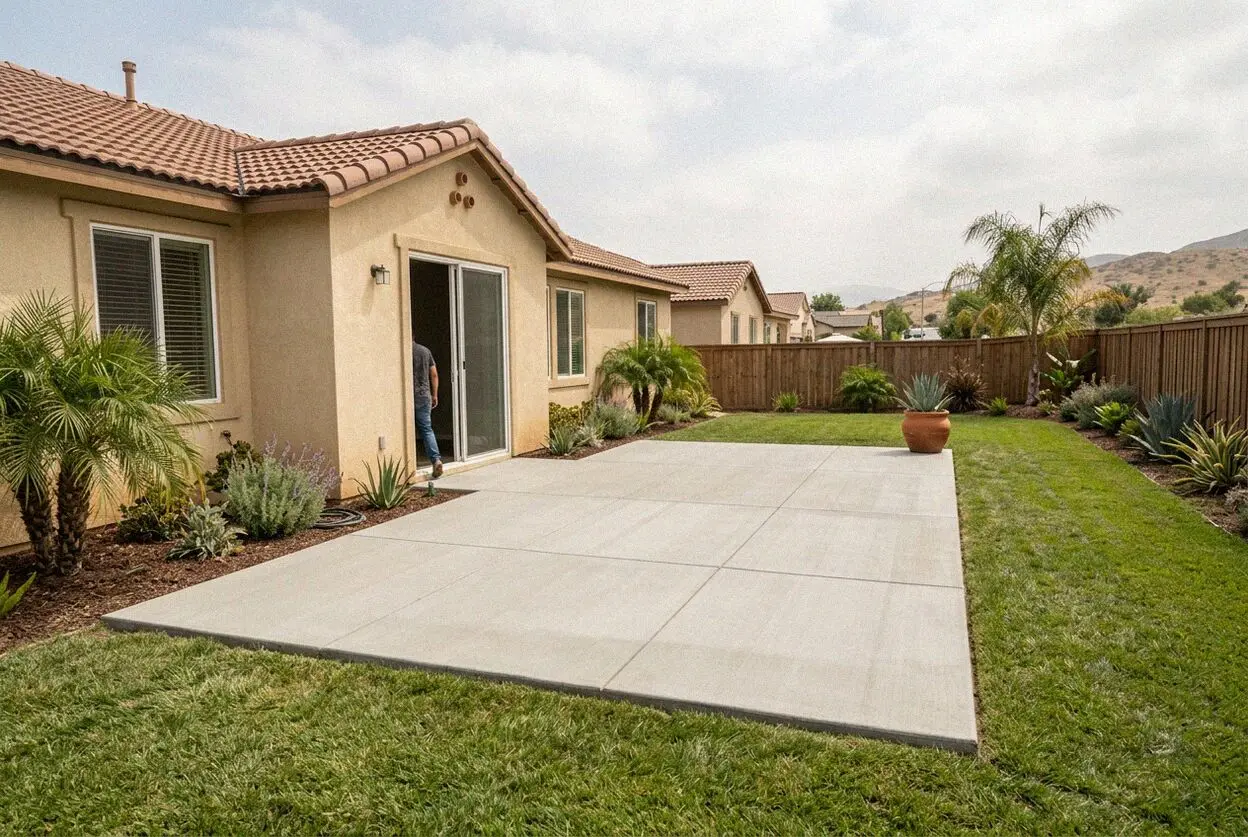
Builder patio split across the middle? We pour patios 4 inches thick on screened base, jointed on a 10-foot grid, with footings for a cover.
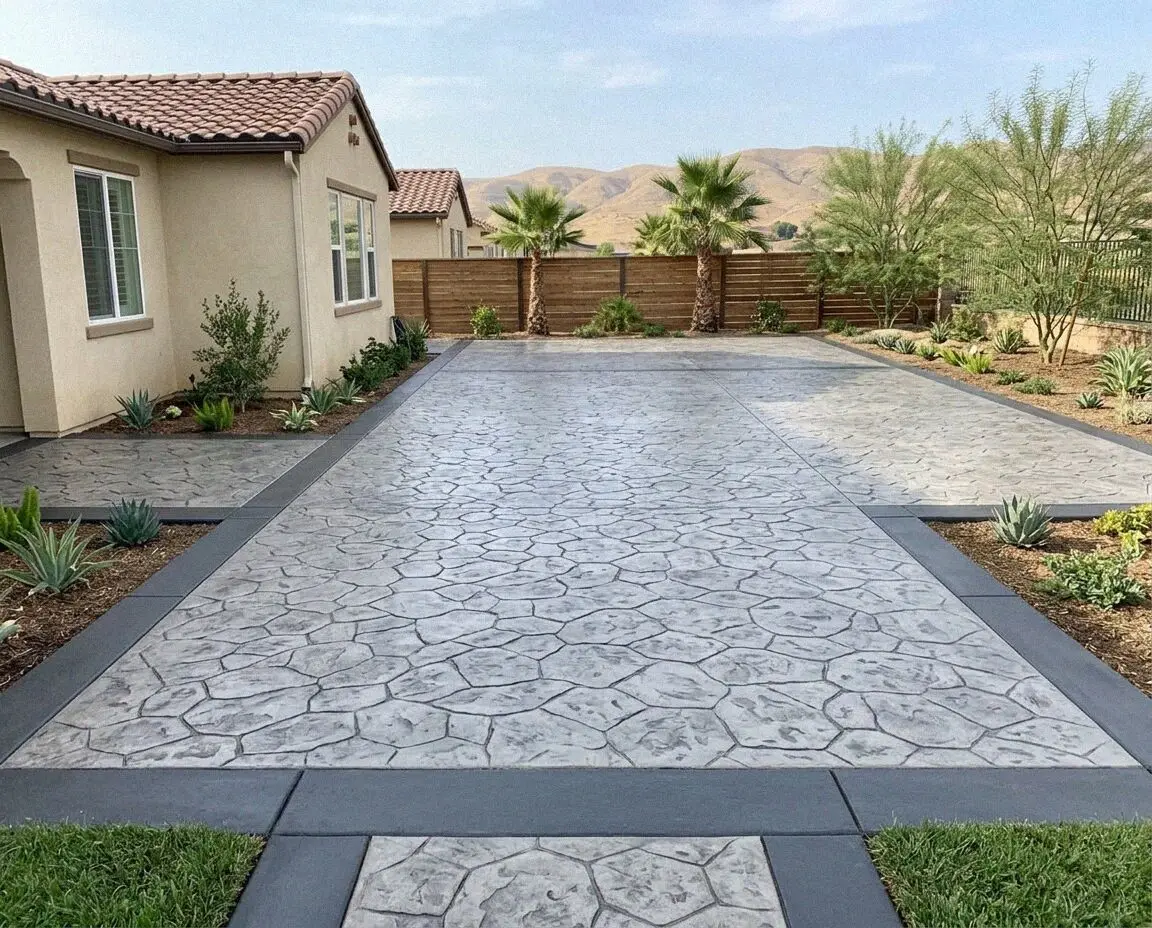
Want stone or brick without laying it? Stamped concrete takes the pattern and color you choose, sealed at 28 days and every 2 to 3 years after.
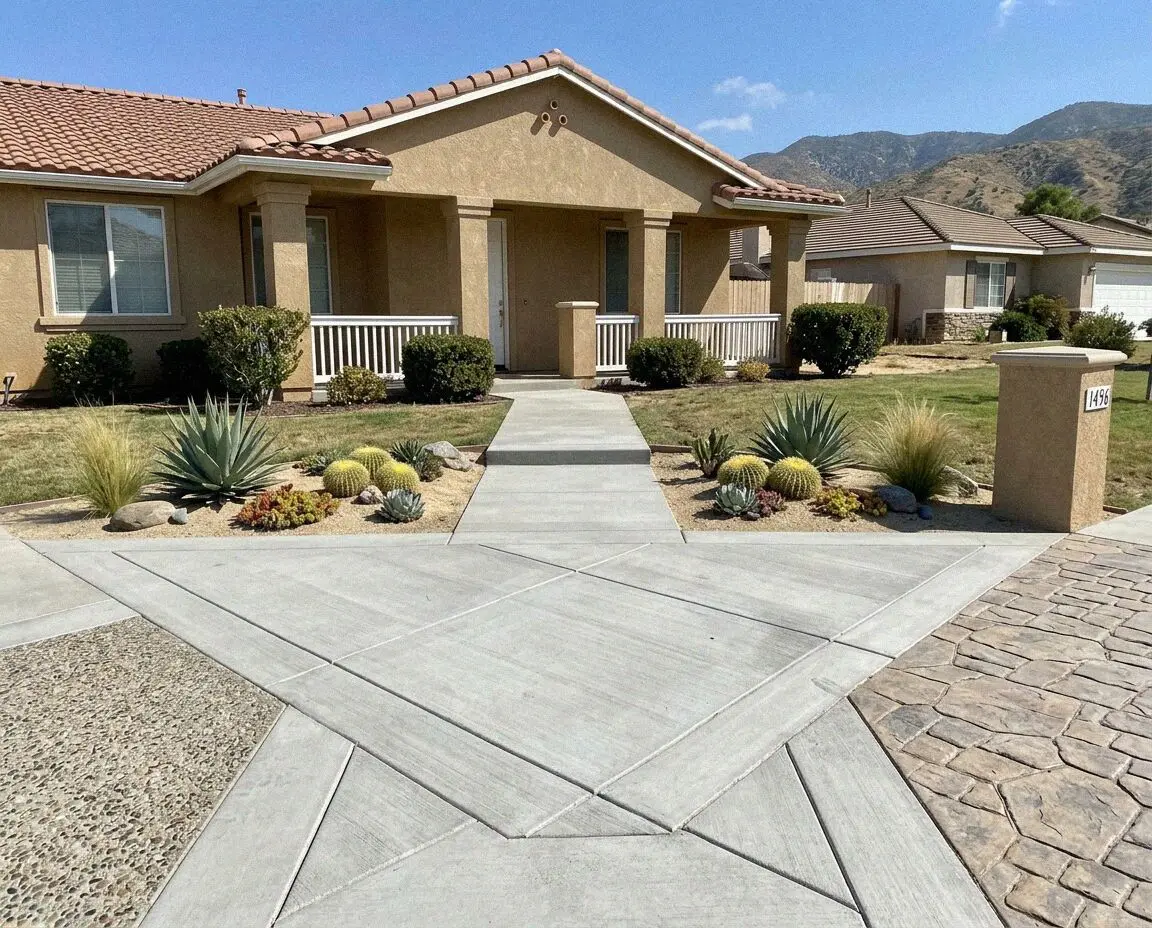
Walk lifted at the tree or broken through at the drive? We cut panels out square, barrier the root and pour back under a 2 percent cross slope.
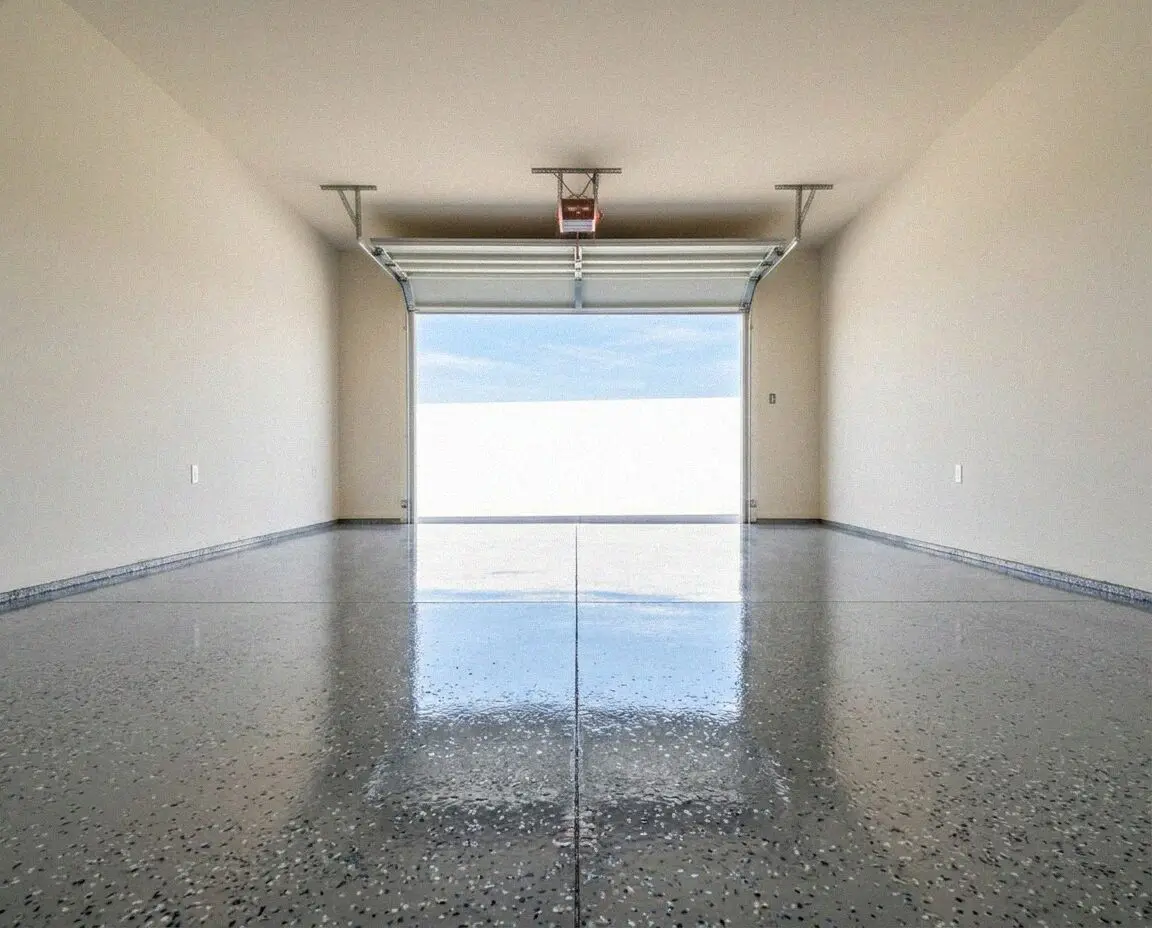
Dusting, dimpled or cracked corner to corner? We pour 5 to 6 inches over a vapor barrier, saw the joints and seal the floor against oil.
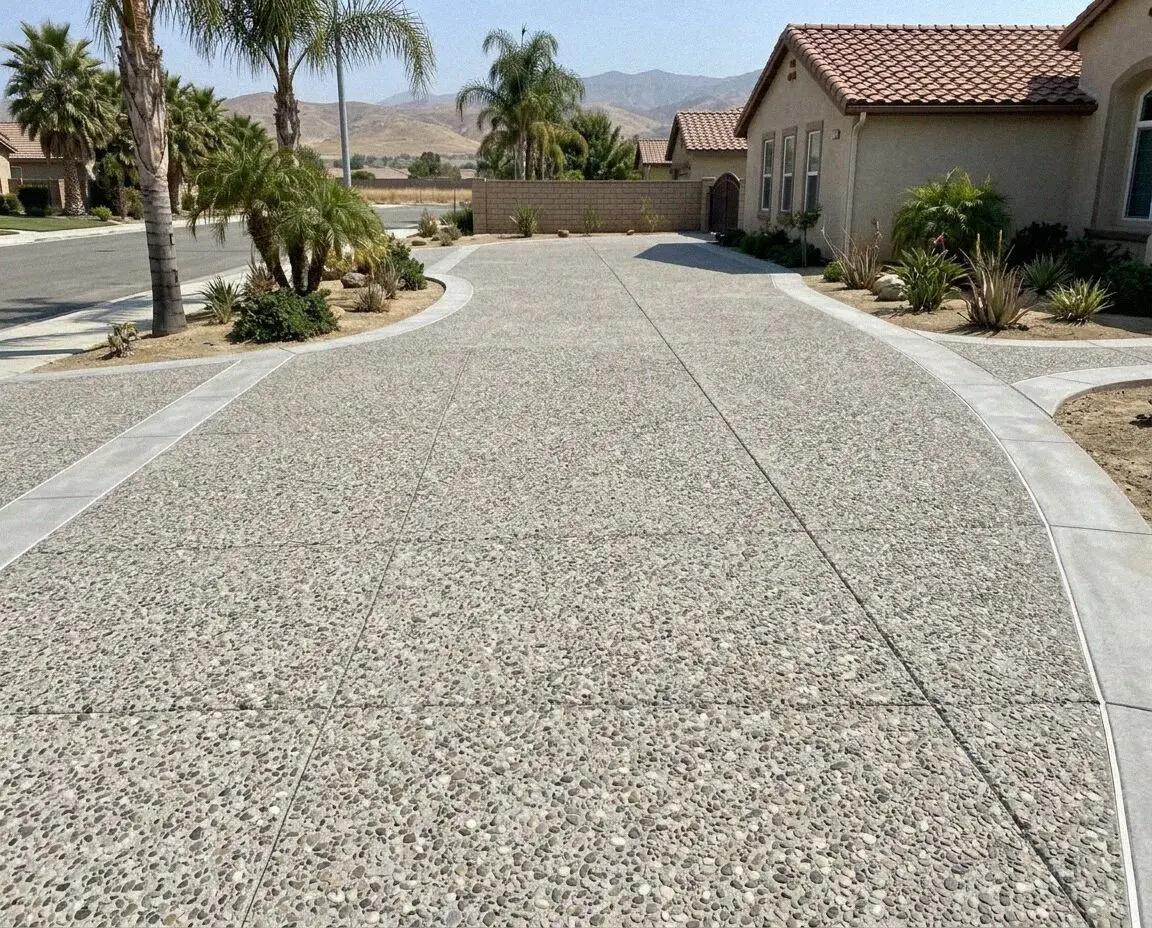
Color, acid stain, exposed aggregate and saw-cut patterns, laid on a new pour or bonded over a sound old slab, then sealed for the sun here.
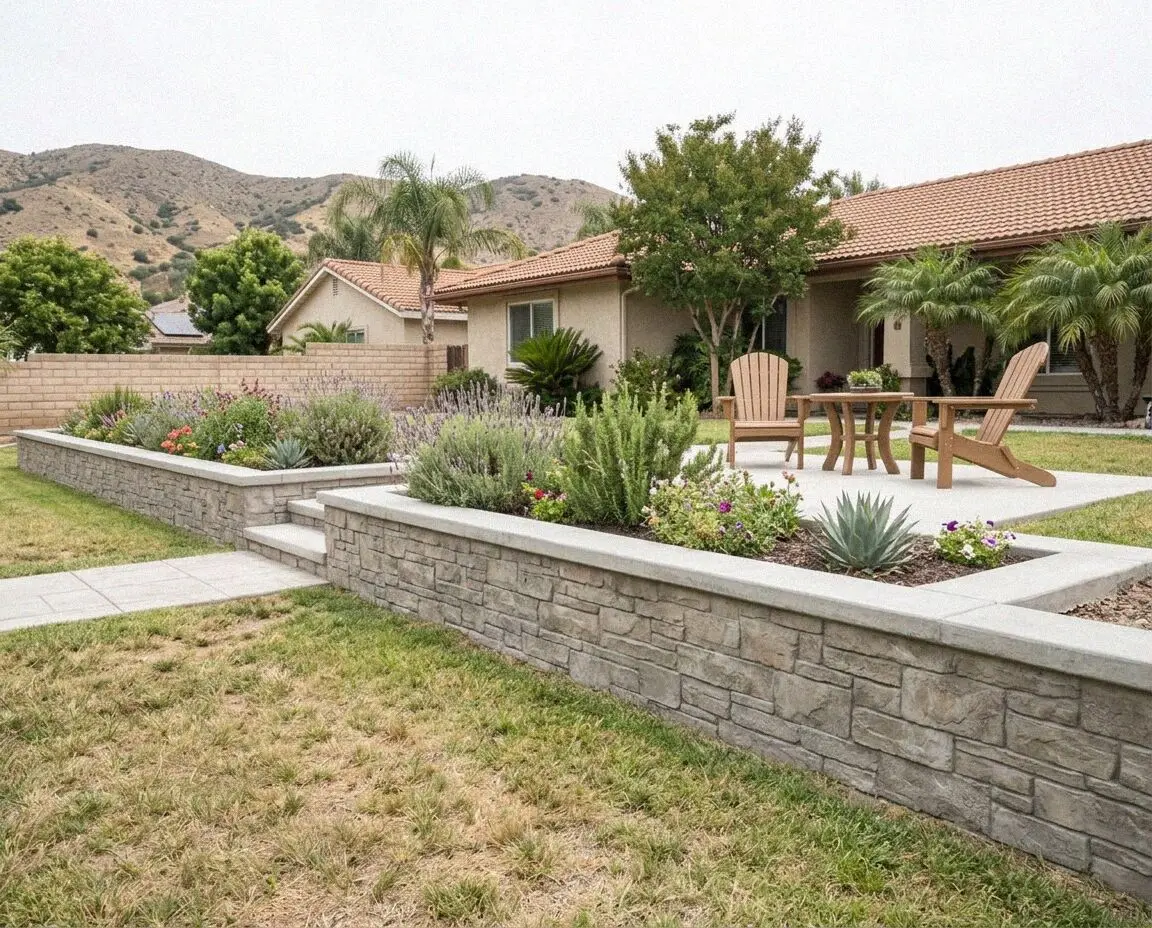
Leaning or bulging wall? We build walls on footings to 24 inches, with gravel, pipe and weep holes behind, and file the Fontana permit.
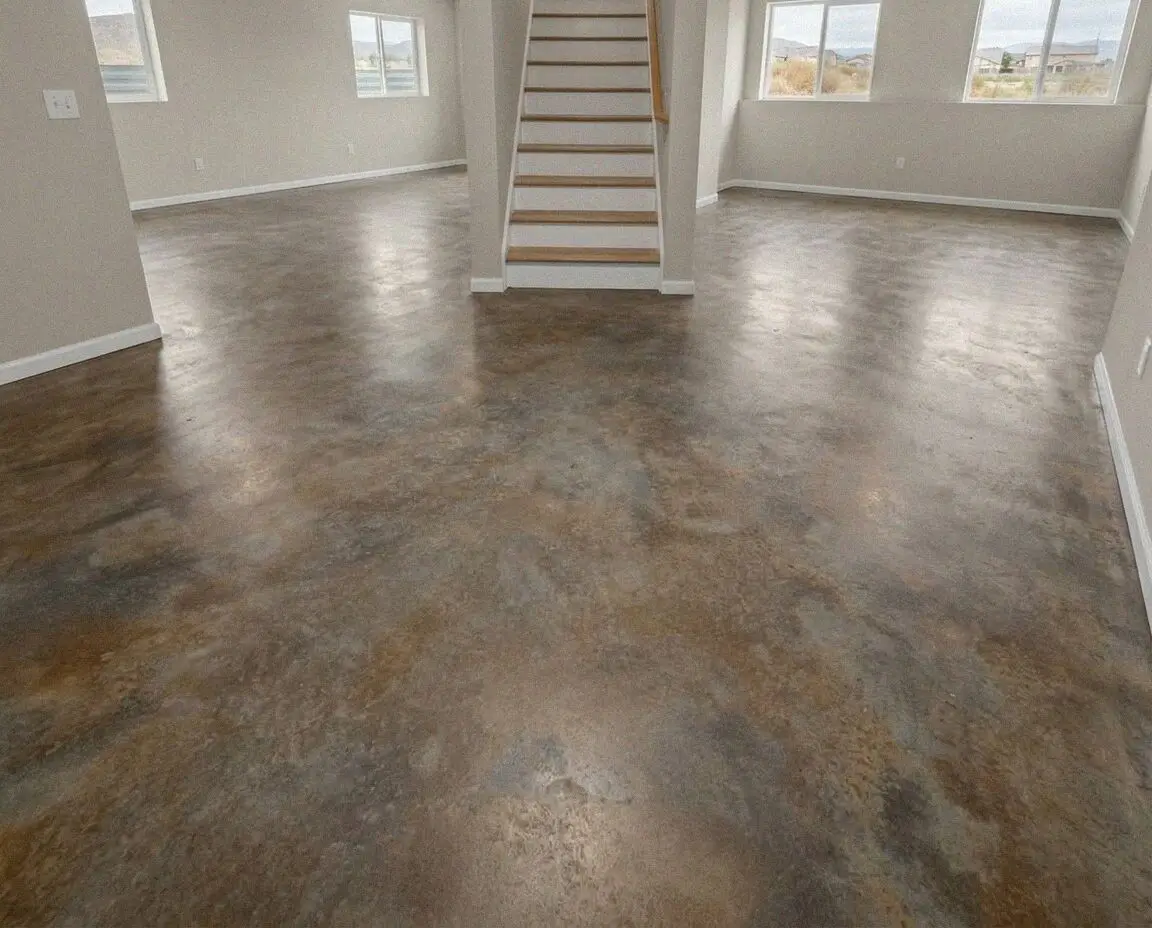
Fitting out a unit, laying flooring or finishing an ADU? We place interior slabs to a measured flatness and read them for moisture first.
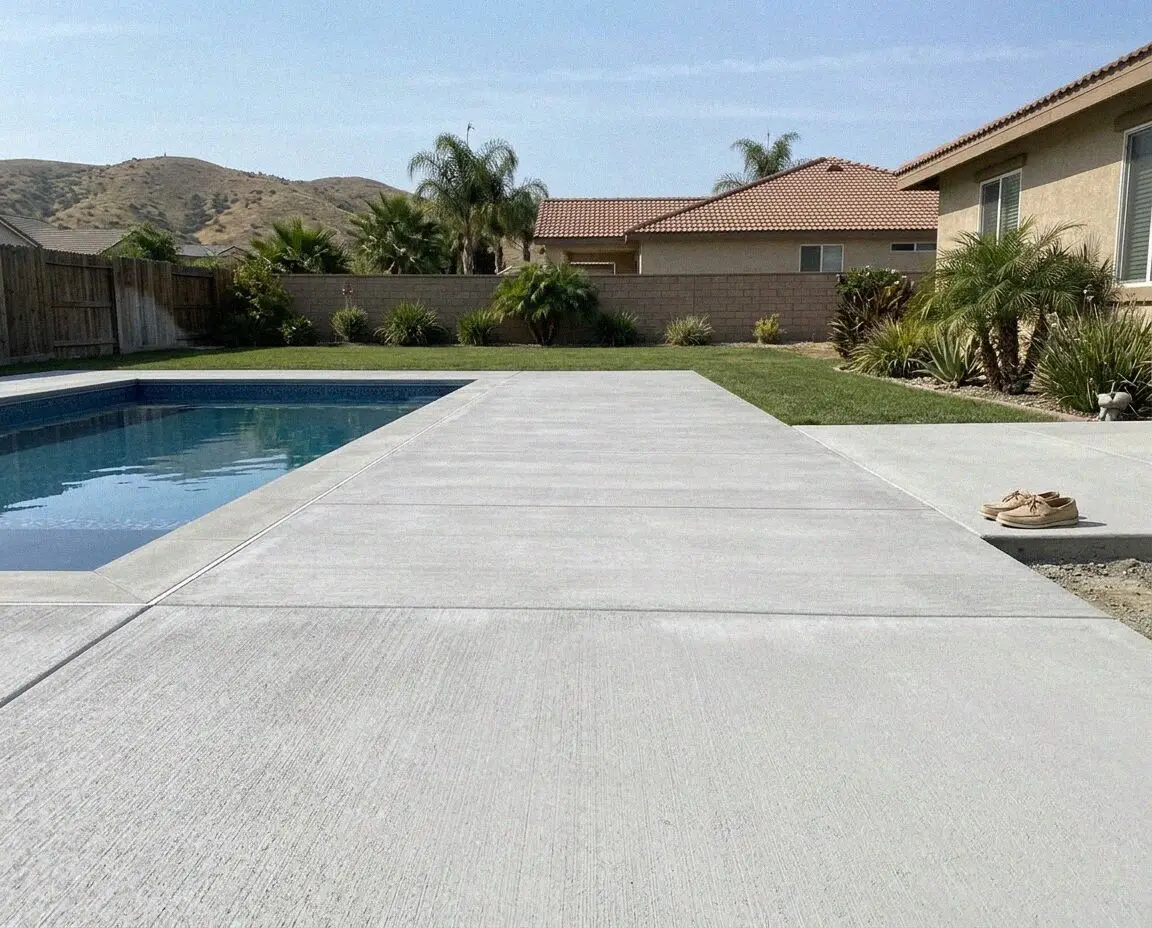
Deck too hot to cross in July? We pour pool surrounds in a light broom finish, the fall carried off the shell and a break at the coping.
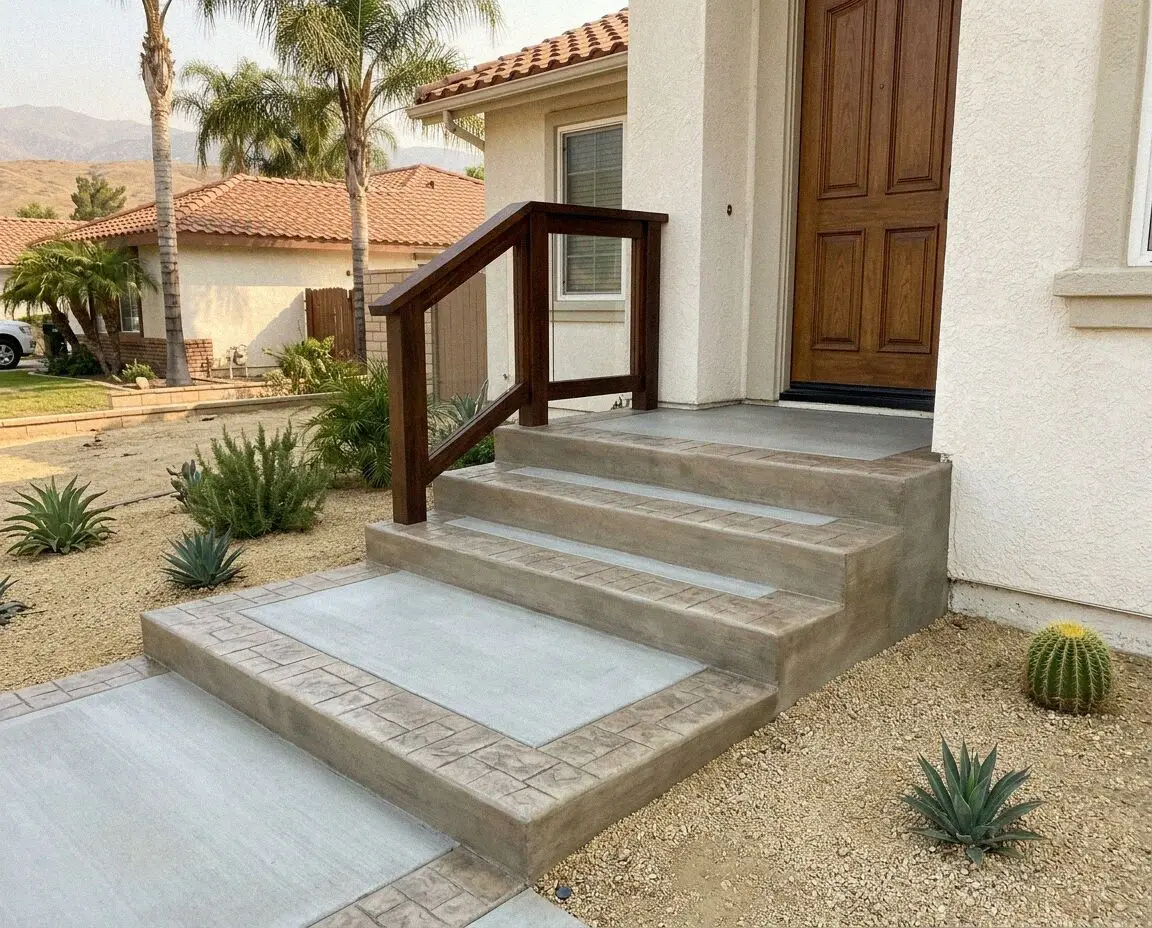
Steps tipped, settled or missing a rail? We divide the rise into even risers, dig footings past the creek gravel and cast the flight whole.
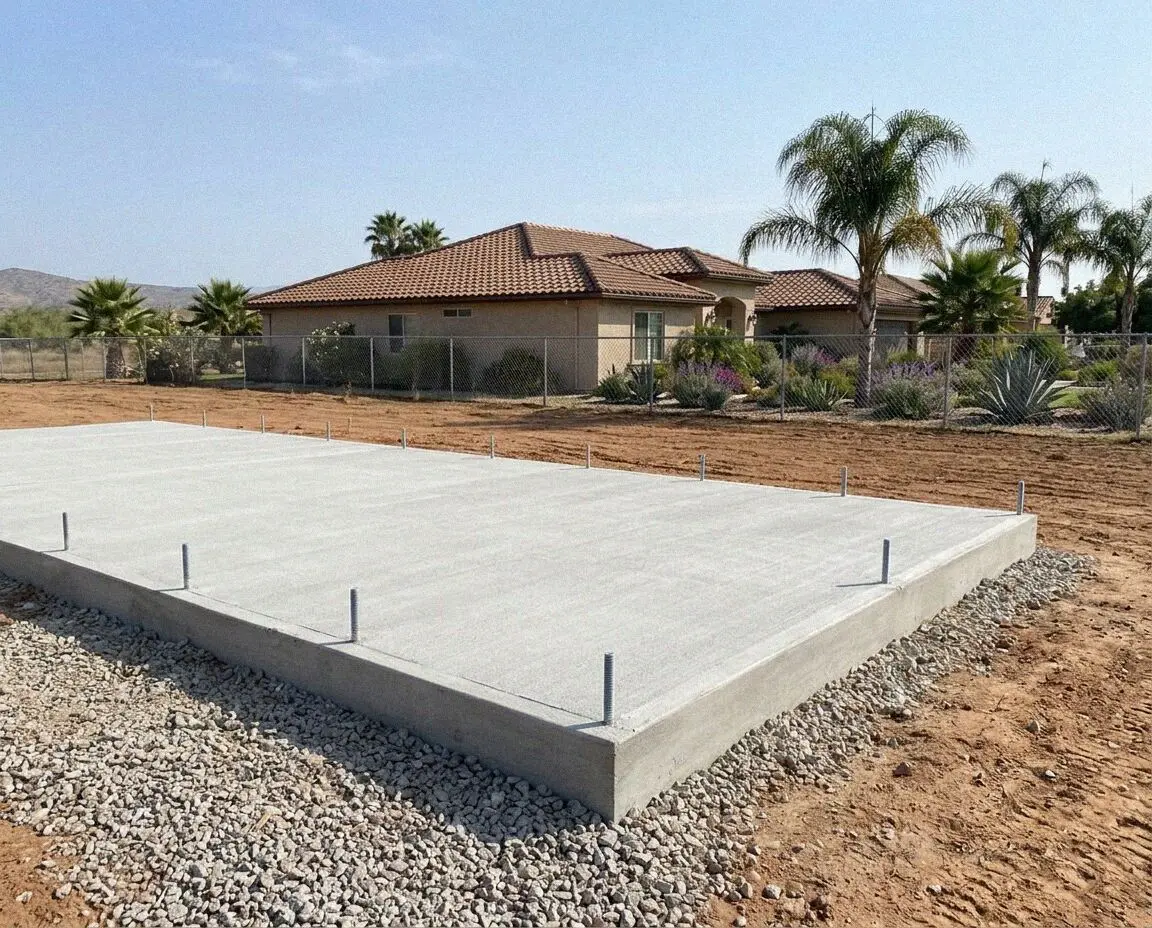
Building an ADU or an addition? We handle the soils report, the engineered plan and the permit, then pour the slab over a 10-mil barrier.
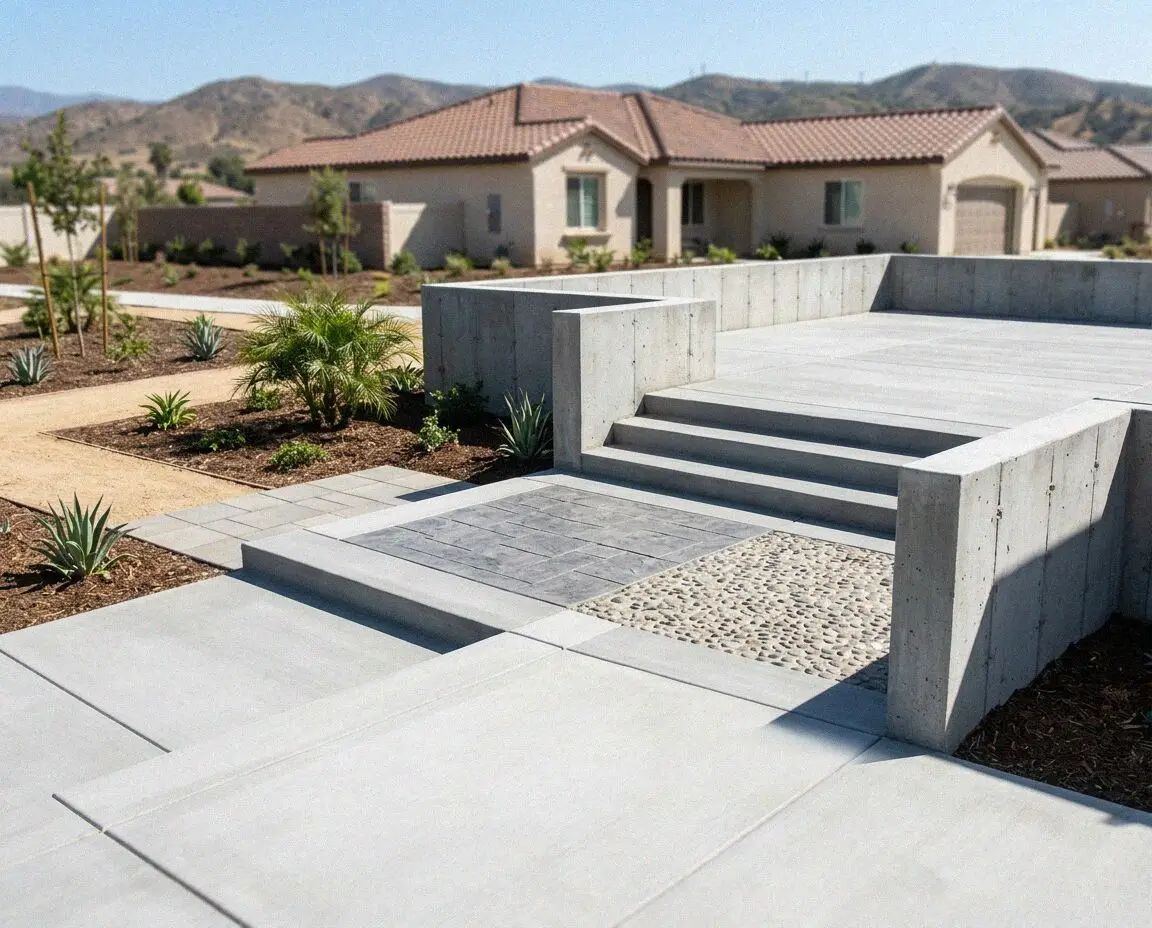
Putting a foundation under an addition, a shop or a house that has outlived its own, stem walls, piers and grade beams, bolted down to code.
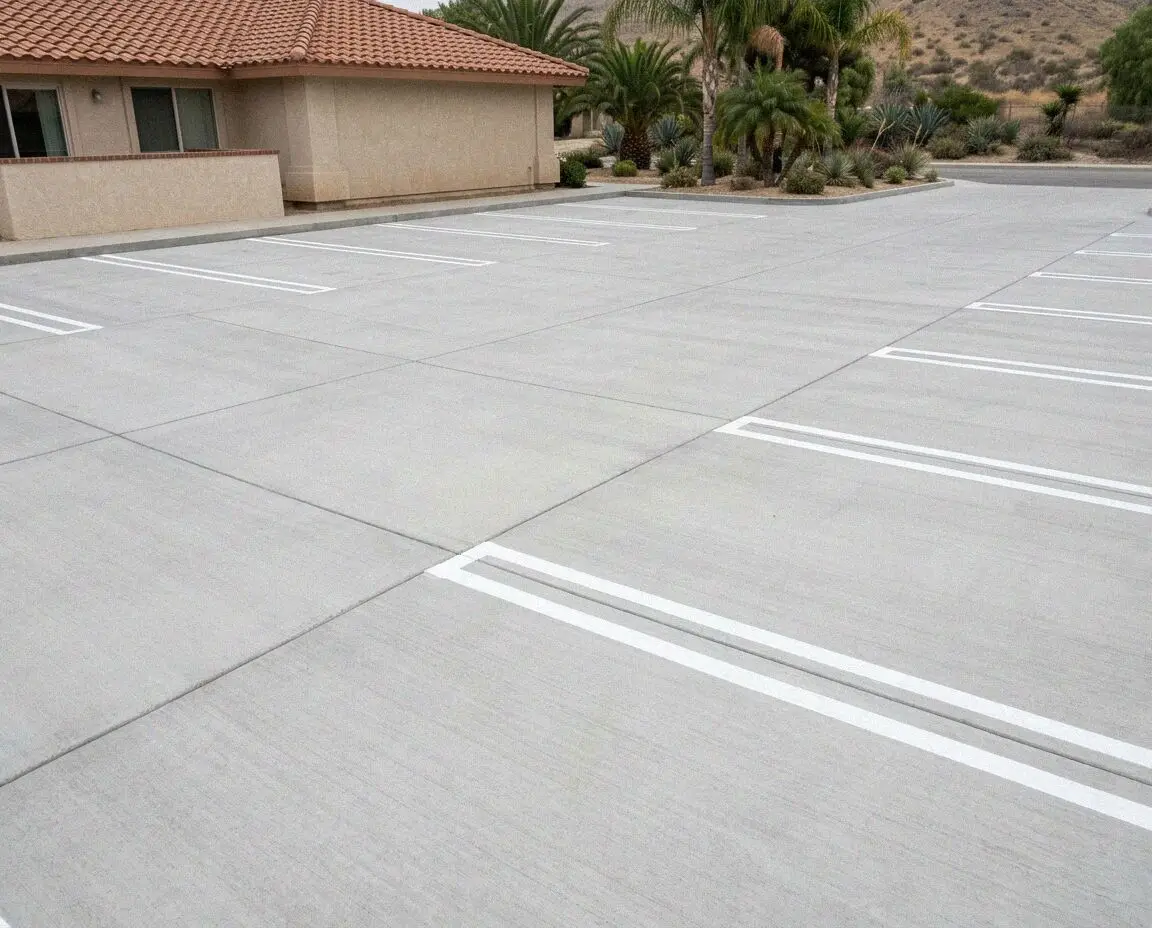
Cracked jack pads or rutted dock approaches? Commercial lots poured 6 to 8 inches, doweled at the crossings, phased so you keep shipping.
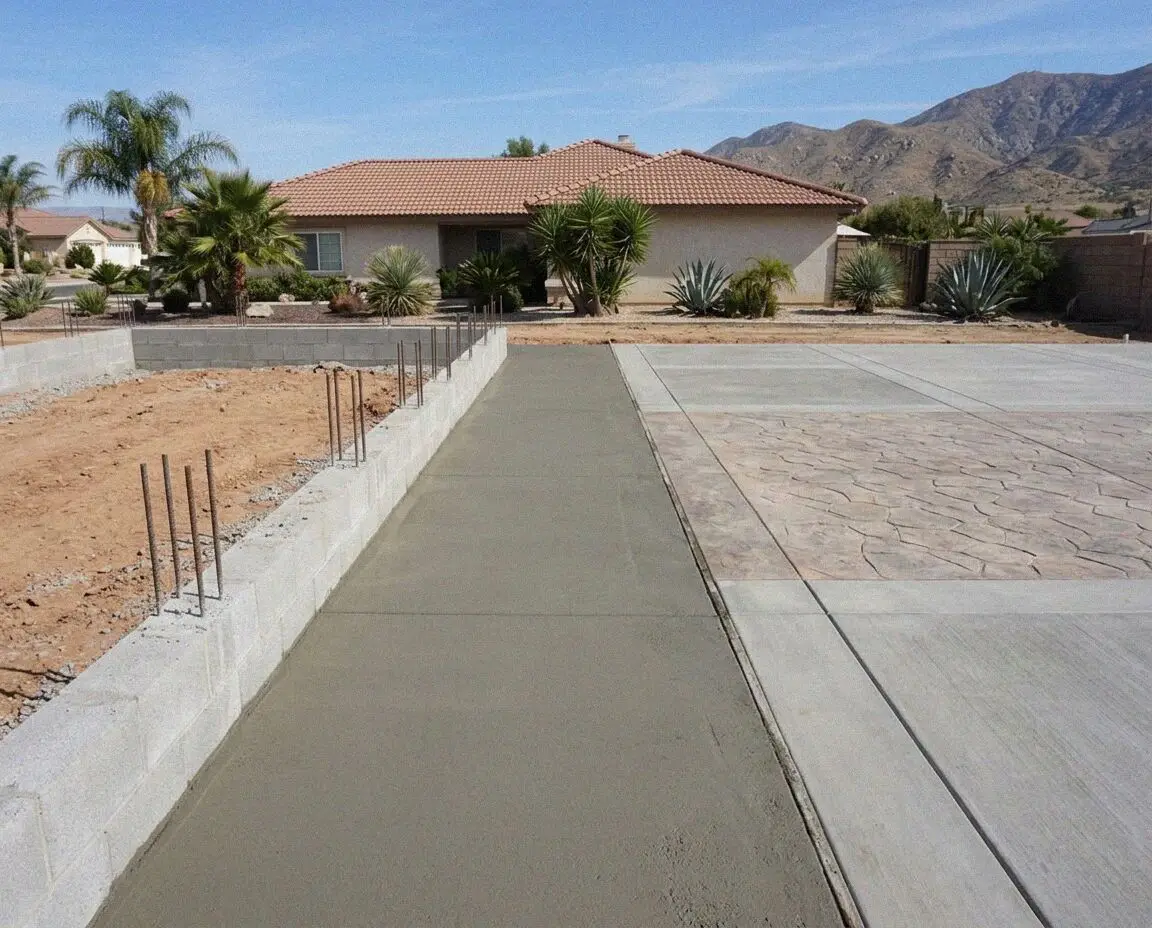
Adding a room, a wall or a shade cover? Footings trenched past made ground to native fan, steel lapped through the corners, inspected open.
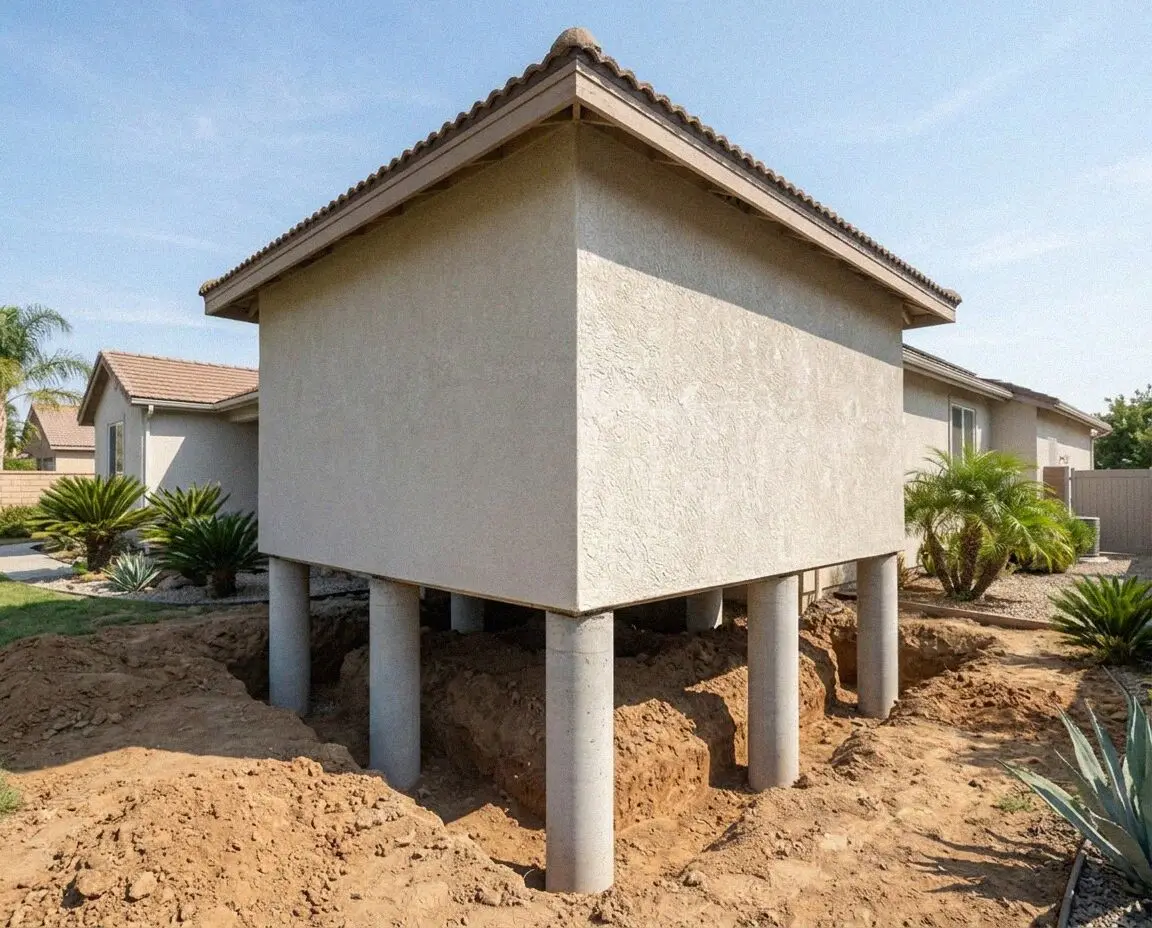
Floors running one way, or a foundation failing under a standing house? We survey it first, and the house goes up on cribbing if it has to.
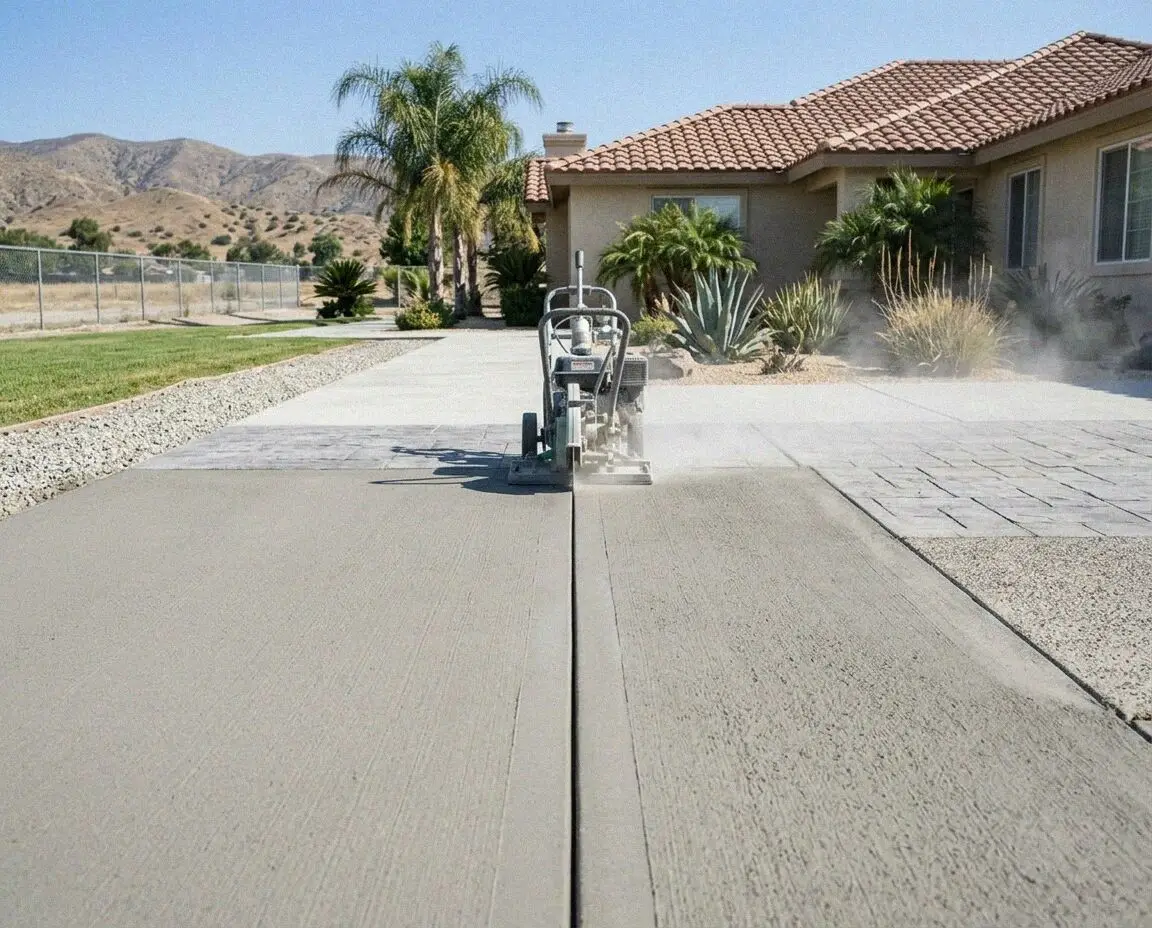
Concrete that has to change shape without leaving the building: a joint grid put into an old bay, a trench, a core, a squared opening.
From the first call to the last joint cut, four stages. Andre Whitfield writes the figure at stage two and runs the pour himself at stage three.
Phone or send the form. We call back within 1 business day and set a time to come out, normally inside the same week.
We walk the lot, dig a test hole in the subgrade, check where the water goes, then price demolition, base, pour and cleanup separately.
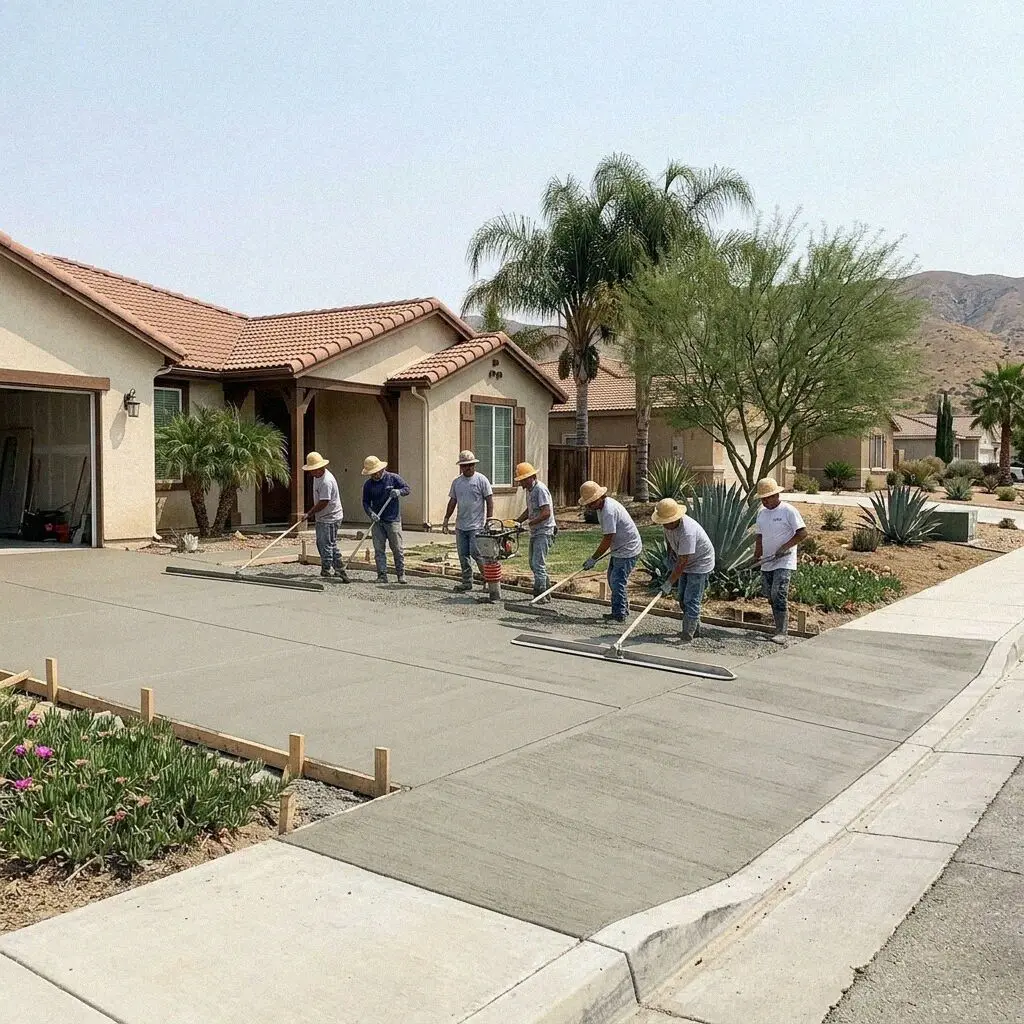
With the estimate signed we lodge any permit, put the crew in the diary and work through: breaking out, base, forms, pour, finish.
We clean up and walk the slab against the estimate with you, base, thickness, joints and finish, and close when you agree.
Look the business up on the California Contractors State License Board register: the classification is C-8, concrete, and it is current. Insurance rides with the crew from a Southridge driveway to a warehouse apron on Slover, so a commercial job and a front drive are covered alike.
Andre Whitfield started the business here in 2019 after 18 years on Inland Empire crews. The cobble in the Lytle Creek wash, the 1950s steel-town slabs south of Valley and the Build Fontana portal are known first-hand, not read about.
Nothing is charged for the visit, and on a Fontana lot it opens with a test hole. Fan gravel drains beautifully and hides soft seams where old washes ran, so what the hole finds decides the base. Demolition, base, pour, finish and cleanup are then priced separately.
The guarantee is written, it is about workmanship, and it covers the way the slab was built rather than the way it is used. What we get called back for here is a slab dropped into a seam the base should have bridged. Wear and seasonal ground movement sit outside it.
Questions before you decide? (909) 555-0168 or send us a message.
Customer Reviews
Homeowners and business owners across San Bernardino and Riverside counties give Steelyard Fontana Concrete 5.0 stars, on Google and on Facebook and at the BBB.
“Our house south of Valley is one of the old steel-town builds and the driveway had never been replaced. They broke out 520 square feet, screened the cobble out of the base and poured 5 inches. Andre cut the joints himself before he left.”
“We are in one of the newer tracts up north and the builder patio was cracked across the middle in three years. Steelyard dug it out, put a proper base under it and poured 320 square feet with joints on a 10-foot grid. No cracks after two summers.”
“The slope at the back of our lot in Jurupa Hills was moving every winter and taking the fence with it. They poured a 40-foot wall on footings to 24 inches with drainage behind it. Two wet seasons on and there is not a crack in it anywhere.”
About Steelyard Fontana Concrete
Steelyard Fontana Concrete has been pouring concrete out of Sierra Avenue since 2019, started by a foreman with 18 years on Inland Empire crews behind him. The work is residential and commercial, 20 towns in four counties.
We pour driveways, garage floors, parking lots, patios and retaining walls, for a city split between 1950s steel-town blocks and tracts poured this century, two different jobs under the same specification. Whatever we pour comes with a written workmanship guarantee.
The C-8 Concrete license sits with the California Contractors State License Board and is active; every job carries liability insurance. Building permits go through the Build Fontana portal and right-of-way work through the Department of Engineering, and we meet both inspectors. Every estimate is measured and written on site.
Our Standard
One specification, whatever the job: the subgrade is opened and compacted, cobble off the Lytle Creek fan is screened out, depth is set at 4 to 6 inches by the load, and the joints go in the same day.
You will know most of these streets: a driveway south of Valley, a patio out at Sierra Lakes, a wall holding a slope in Jurupa Hills. Near enough to drive past one on the way home.
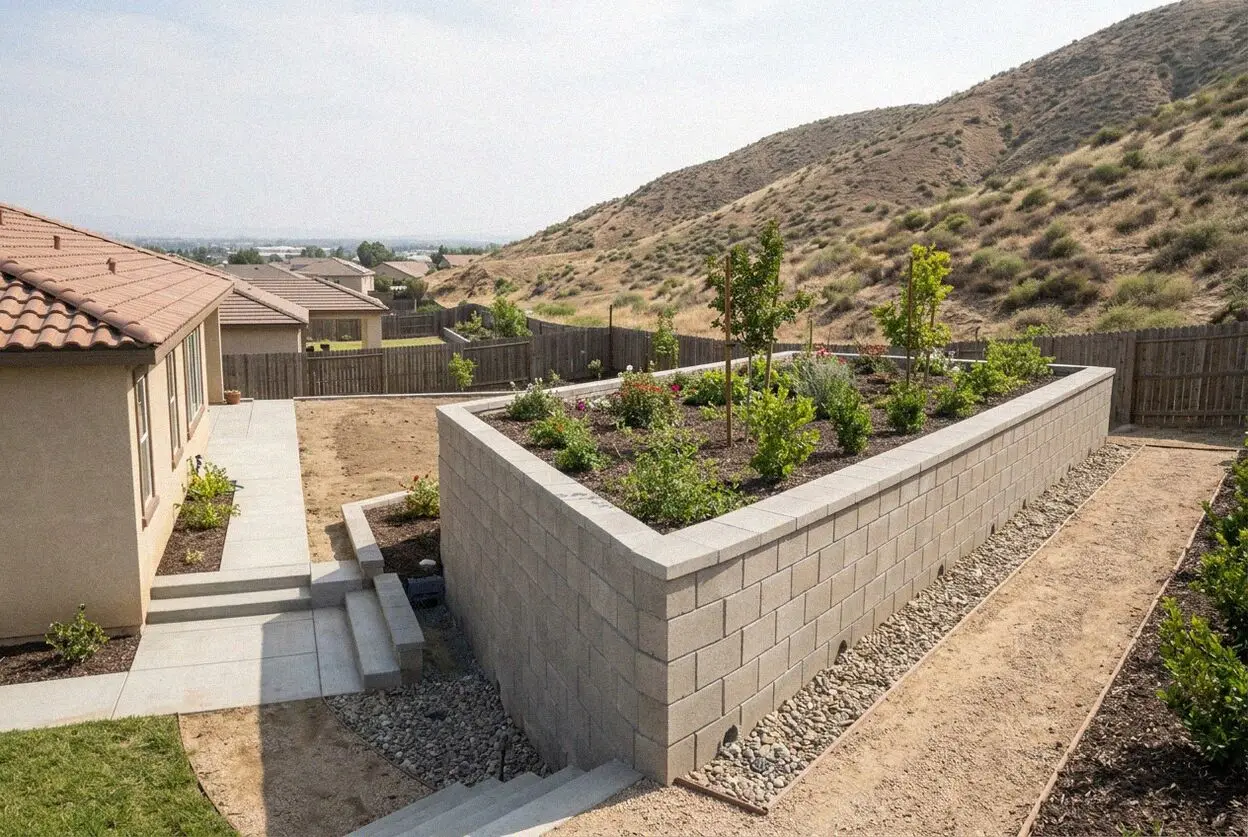
40 ft run at 4 ft high · Drainage behind the stem
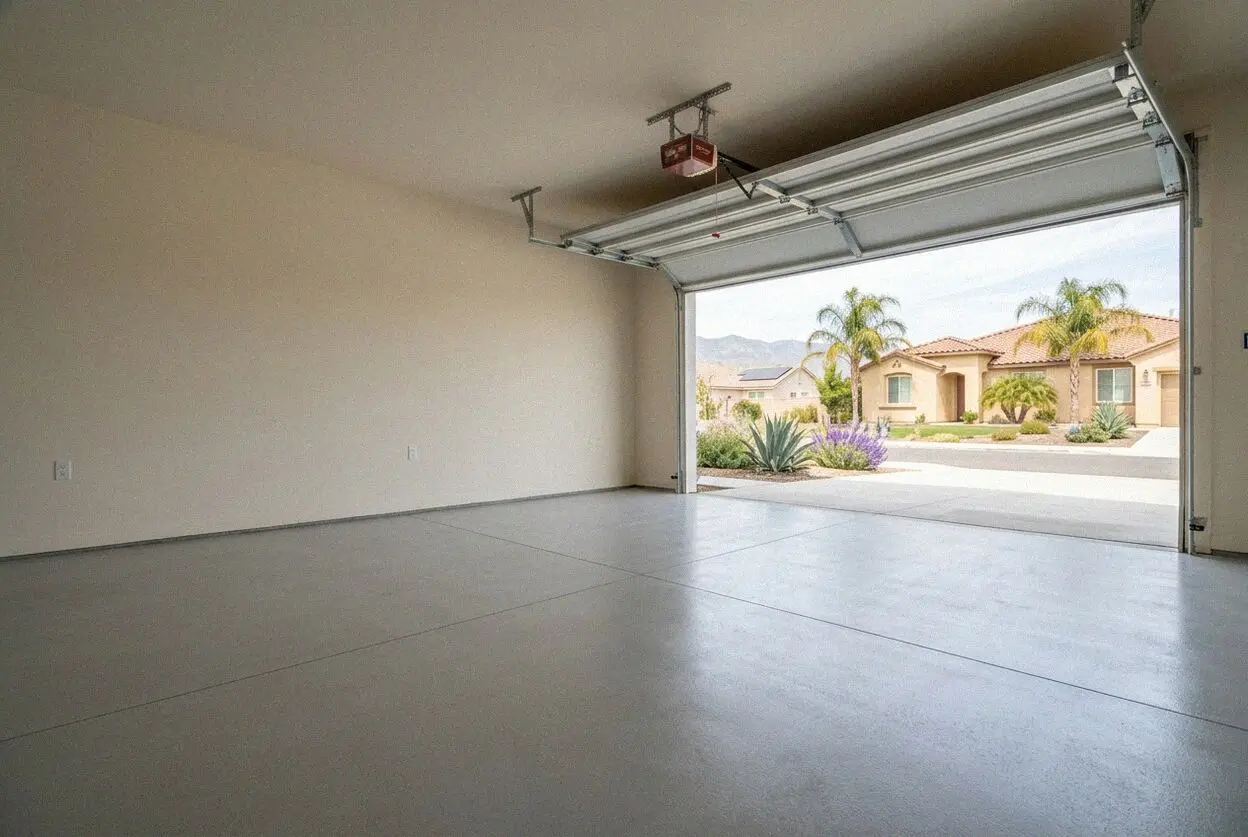
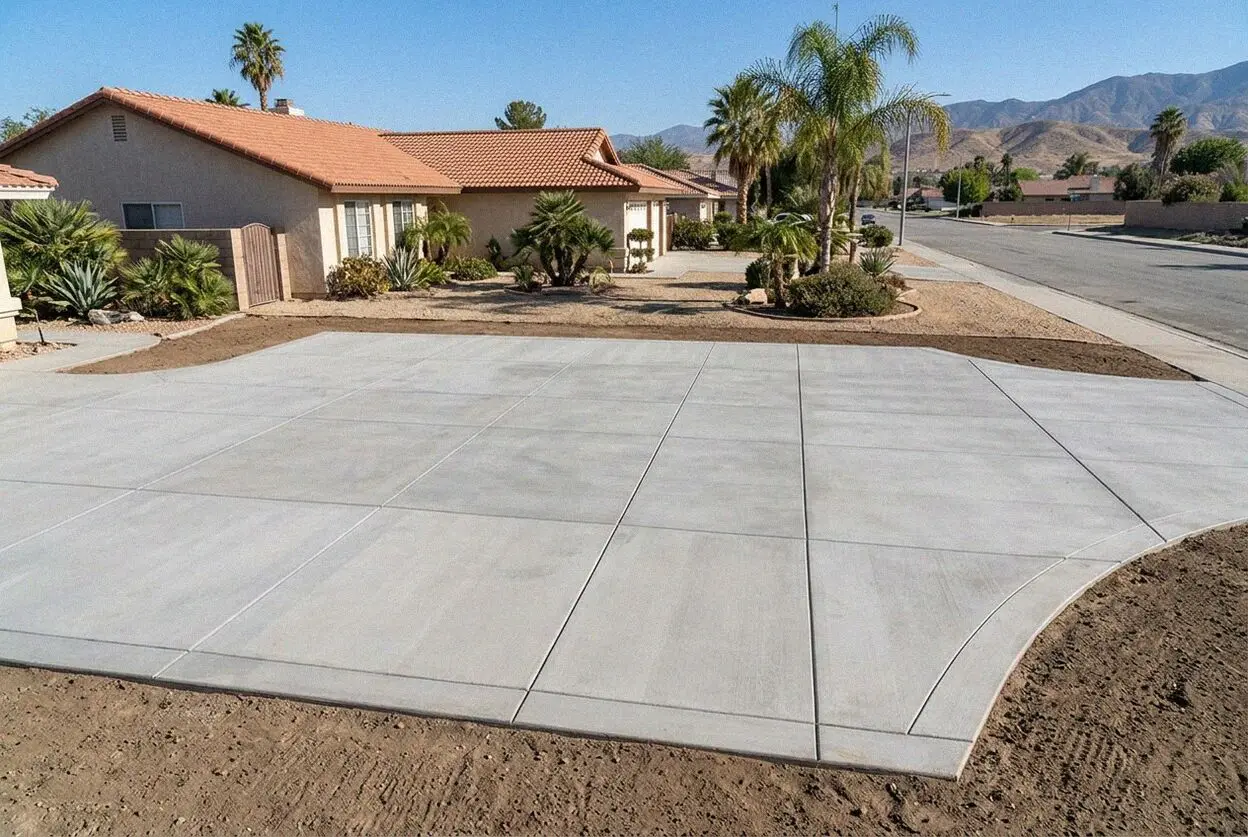
3,400 sq ft at 6 in · Poured in three pours
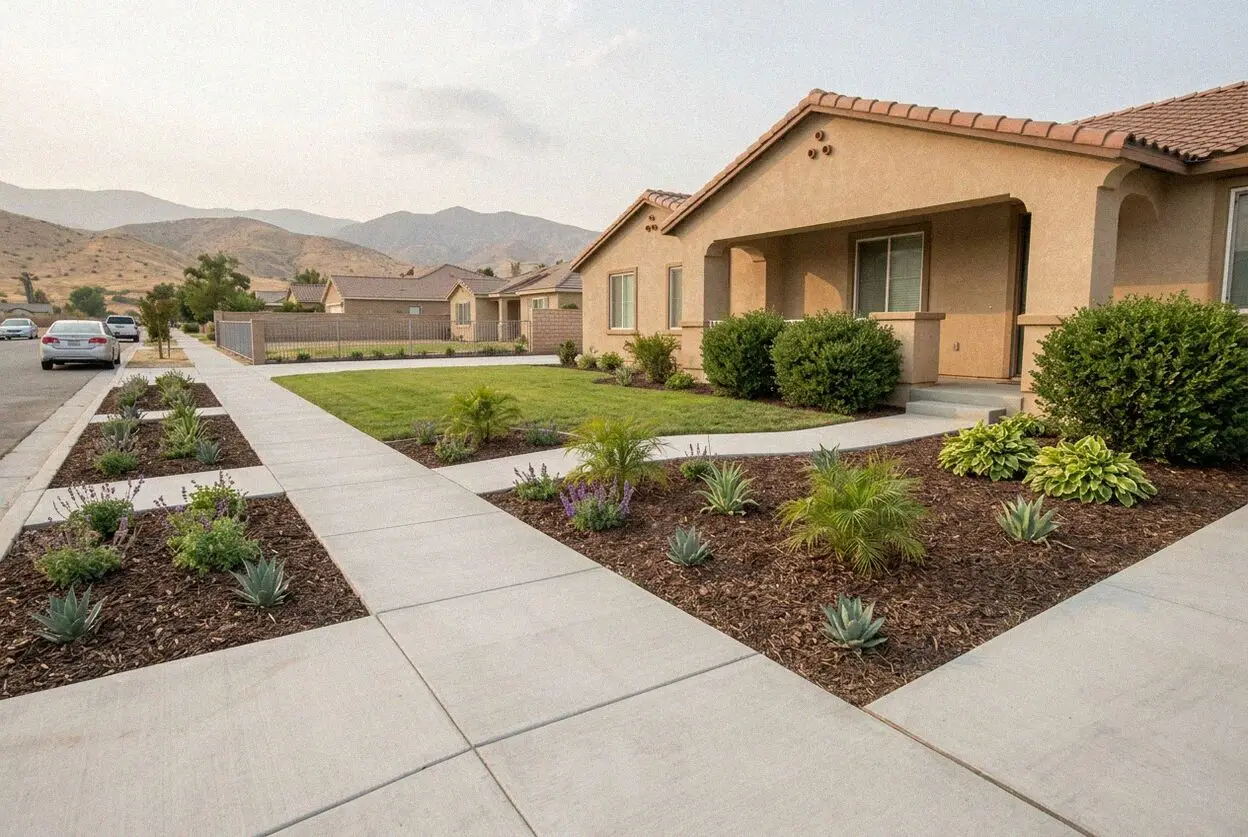
110 linear ft · Encroachment permit and inspection

Andre Whitfield started Steelyard Fontana Concrete in 2019, after 18 years on Inland Empire concrete crews, steel-town driveways south of Valley, warehouse aprons on Slover. His name is on the C-8 license, he lives in the city, and he measures the job and stands over the pour himself.
Local Knowledge
A city split between 1950s steel-town blocks and tracts poured this century, on ground washed down off the mountains, the two facts behind every figure we write.
Fontana incorporated in 1952, a decade after the steel mill brought the town its first wave of housing, and the split is still on the map. South of Valley Boulevard the blocks are 1940s and 1950s, and their driveways are original: 4 inches of unreinforced concrete on native ground, now 70 years old against the 30 to 40 a well-poured slab lasts. North of the 210 the tracts are 1990s to 2010s and failing for the opposite reason.
The ground is what the mountains sent down. Fontana sits on the alluvial fan below Lytle Creek and the San Gabriels, so the subgrade is sand, gravel and cobble rather than the clay that troubles towns further south, it drains well, and it hides voids and soft seams where old washes ran. That is why we open a test hole on the estimate visit. Look your street up on the USDA Web Soil Survey.
The building permit comes from Building & Safety at the City of Fontana, applied for through the Build Fontana portal; work at the curb or across the public walk is right-of-way and goes to the Department of Engineering instead. We lodge both and stand with the inspector. The crew covers the whole city, from the older blocks off Sierra to Sierra Lakes and Coyote Canyon.
Concrete wins in Fontana on heat and on load: asphalt softens above 100 degrees and this is a city of pickups, trailers and delivery trucks parked on residential frontages all week.
| Option | Lifespan | Ready to use | Maintenance | In our heat and gravel |
|---|---|---|---|---|
| Poured concrete | 30-40 years | 24-48 hrs on foot, 7 days for cars | Reseal every 2-3 years | Rigid at 110 degrees; spans the soft seams in fan gravel |
| Asphalt paving | 15-20 years | Cars back on in 2-3 days | Sealcoat every 2-3 years | Softens above 100 degrees |
| Interlocking pavers | 25-50 years on a good base | Walk on it the same day | Re-sand joints every 1-2 years | Settles into a void one paver at a time rather than cracking |
Asphalt is cheapest to lay and dearest to keep, worst of all under a work truck. Pavers cost the most up front and settle into a void one at a time.
Water leaves the top faster than the concrete below can gain strength, and the shrinkage tears the surface. A Fontana July averages 94 degrees and August 95, so trucks come at first light and the slab is kept damp for seven days, the cure the Portland Cement Association publishes.
Because what fails is nearly always underneath. Base rock spread and compacted carries the load sideways and lets water out from under the slab; skip it and the concrete spans the soft spots alone and breaks over one. On the fan that means screening the cobble out first.
Because a base is only as good as its compaction, and rounded cobble off the Lytle Creek fan will not lock together the way crushed rock does. Left in, it leaves voids that close under load and drop the slab with them. We screen it out and bring in graded base instead.
Grooves cut into the fresh slab, spaced 2 to 3 feet for every inch of depth. Concrete shrinks as it cures and it will crack; the groove decides where. On fan gravel the slab spans more than the ground holds, so the panels keep that span from choosing its own line.
Fontana publishes no exempt list, so the state text is what we work to: a driveway or sidewalk not more than 30 inches above adjacent grade is exempt, and no patio slab is named in it. That one goes to the counter. Curb, parkway and walk are right-of-way work.
4 inches carries feet and cars. 5 to 6 inches carries trucks, RVs and a workshop floor, and this is a city of pickups parked on the frontage all week. Depth is the cheapest line on an estimate and the one no repair can add later. Yours is written down.
What Fontana homeowners ask before they book: what moves the figure, how thick it goes, what sits underneath, joints, sealing, permits, how long, and what the guarantee covers.
Depth moves the figure before area does: going from 4 inches to 5 is a quarter more concrete and a deeper base to carry it. Then it is how much old slab has to come out, how much cobble has to be screened from the base, and the finish you choose. All four get measured on the free visit and written down.
Area, depth and ground, in that order. A 1950s block south of Valley with 70-year-old concrete over native fan gravel is not the same job as a 2005 tract drive, and the break-out and the base carry that difference. It is measured on your lot and written out stage by stage.
Most patios are 4 inches on compacted base, so what moves the figure is area, access and finish. In the north Fontana tracts the side gates are wide enough for a machine, which keeps the labor down; on the older blocks south of Valley it is barrows, and that is where the difference lands.
Under a car, 4 inches. Under a work truck or a trailer, 5 to 6, and half the driveways on this side of the city carry one. An inch under-poured cannot be put right later: it cracks in normal use within a few years, and the patch never matches. What your drive gets is written on the estimate.
The slab only performs as well as what it sits on, and most failures begin below it. Compacted rock carries the load outward and lets water drain from beneath. Fan gravel drains well but hides soft seams where old washes ran, so we open a test hole, screen the cobble out and compact graded base in layers.
Those are control joints: sawn lines put into the slab while it is fresh, one every 2 to 3 feet for each inch of depth. Any crack that comes then follows the line instead of wandering. On fan gravel the slab is doing more spanning than the ground is holding, so panel size is what keeps that span in check.
Less than the clay towns south of here, but for a different reason. Fontana sits on an alluvial fan of sand, gravel and cobble that drains well and settles unevenly, so a slab poured straight onto it bridges the soft seams until it breaks over one. The fix is under the concrete: open the ground, screen it, compact it in layers.
November to March, while afternoons stay below 90 degrees. Fontana holds in the mid-90s through July and August, and at that temperature the top of a slab loses its water before the concrete has set, which is where shrinkage cracking comes from. Summer pours go ahead, but they start at first light and the slab is kept damp for seven days.
Every 2 to 3 years, and sooner than a coastal slab needs it. Bare concrete is porous: oil off a work truck and water soak straight in and the stain does not come out, and inland ultraviolet takes the color out of stamped work faster. Shorten the interval where a truck parks or the sun sits on it all afternoon.
Most residential jobs are 3 to 5 days on site, then the cure. On a north Fontana tract the break-out is quick and the base is the work; south of Valley a 70-year-old slab takes a day on its own. Walk on it after 24 to 48 hours, park after 7 days, bring a truck on at 28.
Inside your own lot line, usually not: the state code exempts a driveway or a walk that is not more than 30 inches above adjacent grade. Fontana publishes no list of its own and the code names no patio slab, so that one goes to the counter as a question. Curb, parkway and the walk out front are city right-of-way, so Engineering issues that permit; a wall over 4 feet, footing included, takes a building permit.
The workmanship, in writing: the base, the depth, the joints and the finish, and its terms are printed on the estimate you put your name to. Cobble left in a base is a defect; a hairline that lands in a joint is the joint working. Staining and normal wear are outside it, said before you sign rather than after.
Service Area
We pour all over the Inland Empire, and these are the towns we have come to know properly, the older tracts, the ground they sit on, and who to talk to at each city counter. Pick yours below, or call and we will say straight away whether we can come out.
 Open the Fontana Office in Google Maps
 Use the form or ring the yard. The call back comes within 1 business day, and Andre Whitfield opens a test hole on the visit before he puts a figure on anything. You get the estimate written out on the spot, itemized, with nothing to sign.